Monday, March 11, 2013

End of the run

During the winter things at Sarvey inevitably slow down. The babies all fledge or wean, and the place gradually starts to empty out. That's not to say that we're ever well and truly empty. There are still plenty of patients to care for, as well as our permanent residents. Unfortunately the onset of winter means the end of internships and my paid time at Sarvey. So I'll recap here on some of the winter happenings, and I'll use the opportunity to further my experience in other areas.

We said goodbye to a couple of our permanent residents this winter. One of which I had the opportunity to get to know very well. Atka was a little Northern Saw-whet owl who spent a brief period of time living with us as a permanent member of our Sarvey family. She was a small owl with a lot of personality, and she managed to charm just about everyone that met her. She was brought to Sarvey with head trauma that resulted in the loss of her left eye. Unfortunately her remaining eye deteriorated quickly, and within a year of coming to Sarvey she was fully blind. The day we said goodbye to her was difficult for everyone that cared for her.

 I know that I personally learned to love her for all of her little quirks. I tried my best to make her as comfortable as possible as her quality of life deteriorated, and I was there beside her when she passed away. 

Atka provided me with a wealth of invaluable experience. She taught me some tough lessons, and allowed me to feel a connection that I hadn't previously had the pleasure of feeling with any animal. She was truly an amazing little bird, and I will always think of her fondly. 


We also said goodbye to our Static education raven Rex. Several of us were quite attached to him, and were saddened by the loss of him. Rex was a very intelligent bird, but he was also very nervous, and did not enjoy the company of humans. He was often visited by other ravens living in the area, and could be glimpsed interacting with them from time to time. Unfortunately, his quality of life declined to the point where it was deemed necessary to perform a humane euthanasia. He was a fascinating bird, and a not one we will soon forget.


....

During the winter, I noticed odd little trends cropping up with the rehabilitating wildlife. We seemed to be getting a bunch of the same type of animal all at once. It started with Barred owls, and then we suddenly were intaking ducks left and right. Now we're inundated with Red-tailed Hawks. 
A Male Bufflehead

The ducks were especially interesting to me. There are so many different varieties. I never really thought much about ducks during my internship. Despite focusing primarily on birds, the ducks were for the most part outside of my realm. 

I imagine this was probably a good thing, because we must have had hundreds of ducklings, and I think my head might have exploded if I'd been dealing with them on top of all of the other babies I was working with. 

A juvenile Common Goldeneye
Most of the Ducklings we got in during the summer were Mallards with a few random species mixed in. Mallards are one of those species that you pretty much see every time you go to a park or a beach, so I admittedly never paid them much mind other than when I was tending to them.

It wasn't until after all of the freshly fledged mallards took their leave, and baby season dwindled to an end that I started noticing ducks. They became less of a regular occurrence through the winter. Suddenly we had some really interesting species cropping up. 

A Lesser Scaup
Buffleheads, Goldeneyes, Scaups, and several other neat birds rolled through the clinic. Since they weren't as common of an occurrence they were easier to take a vested interest in. Along with the ducks came other fascinatingly similar species such as grebes, and coots. Now that I suddenly had time, I found that it was so much easier to really appreciate these birds. It's amazing how much personality they have. Buffleheads are one of my favorites. Right now we have a Bufflehead who, when threatened, will turn his back, wiggle his tail, and open his mouth as wide as possible to look threatening. 

The lobed foot of an American Coot


The other thing that endeared me to them was going above and beyond to learn about their individual natural histories. There's nothing quite like being able to apply learned knowledge to an animal that is struggling to thrive, and actually see it affect them positively. These little highly specialized ducks made this especially satisfying. It also offered me the ability to connect with some of my coworkers through learning about species with special needs.
A common Murre


Two of the most interesting, and unusual patients we had in my opinion were a Marbled Murrelet, and Common Murre. These were both neat little Seabirds that I honestly didn't even know existed beforehand. I remember that when we initially got the call about the Murre, it was from someone in the middle of farm country claiming that they'd found a penguin. 


A Marbled Murrelet
I guess they were too off. Common Murres are essentially large Auks, and I can easily see how they could have been mistaking. Seeing the original, grainy, cell phone pictures the finder sent us to confirm the species left me feeling pretty confused myself. I'd never seen an Auk outside of an aquarium, and I couldn't for the life of my figure out what a seabird like that was doing so far inland. 

The Murrelet was actually an intake that happened before the Murre. They're small, stout-bodied birds, with teeny little flippery feet that wiggle when you pick them up. They look much more Auk-like to me than the Murrelet. Though, my Auk experience is strictly limited to the occasional trip to the Seattle aquarium. Just as an aside, they look absolutely silly as chicks. Seriously, just look at that. How is that even the same bird? Although, perhaps they don't look as soul-crushingly huggable as a Tawny Frogmouth chick. That is just sickeningly cute. Australia gets all the cool birds.


Mostly, winter was business as usual. We had a few snowy owls roll through this year actually. We successfully released a one-eyed snowy not too long ago, which was pretty exciting. We've most just had a lot of common raptors come through the doors though, as well as a few small passerines including an Anna's Hummingbird, that I took a special interest in. The little guy was able to be released in full health back into the are he came from after it warmed up a bit. 

Here in Washington we have Anna's hummingbirds all year round. This is partially due to the fact that they have a higher dietary intake of insects than the other hummingbird species indigenous to the region. I was actually able to get help with caring for this little bird From Jane with Mt. Vernon Songbird Sanctuary, based out of Connecticut. Even though they specialize in Ruby-throated hummingbirds, and are located quite a ways away, Jane was incredibly helpful, and was able to impart on us some very useful knowledge. I'm so grateful for her help!

....

Athena, looking awfully cozy on her perch.
Sarvey has been undergoing a lot of changes this winter. We have some great plans to eventually build a new clinic, as well as establish a public education meadow on the property for our permanent residents. We're all really excited for all the positive changes that are sure to come from it. 

I keep seeing signs that we're getting super close to the onset of baby season though. One of which being the fact that our Educational Great Horned owl, Athena, laid eggs recently. That's usually a pretty good sign that the wild owls are soon to be following suit.

Athena has since seemingly abandoned the eggs. They've gone unattended for about a week and a half now. She's back to perching in her usual spots, and doesn't seem too keen on the idea of going back to tending them. 

Athena's eggs


Athena's eggs are surprisingly about the same size as an average store-bought chicken egg. I'm always caught off guard by this when I see them. They look so normal, and unassuming. As if someone placed chicken eggs in her flight as a joke. They're definitely hers though. Athena guards her eggs pretty fiercely when she's in a nesting mood. Just wait until she gets babies. That bird seriously raises the meanest babies. 
 ....

A Sharp-shinned hawk with severe
head trauma being examined at intake.
The quiet atmosphere of winter offered me the opportunity to learn quite a bit. I got to be more involved in the intake of animals to the clinic, and help with medical procedures such as applying wraps, anesthetizing, and medicating animals. I got to learn more about the way these things work, and why. As things slowed down even further I got to become more involved in the natural history of the animals receive  and I collected a lot of information about their diets.

I also had the opportunity to read through a lot of the material available for those who plan to take the test to get their state rehabilitation permit. There's a lot of great general information available, and a lot of the source material isn't too terribly expensive. 

I'll leave you with a few more pictures from my time at Sarvey.


Saturday, October 13, 2012

And off we go!

Baby season is winding down at this point, at least as far as birds go. Right now I'm down to a few baby Cedar Waxwings, and some swallows, and I've been spending a lot more time helping out in other parts of the center. I can say a few things about my experience with certainty. It's difficult work. The hours are long, there's a lot to do during the day, and sometimes it can be incredibly frustrating. That being said, I'm honestly even more in love with birds than ever. Coming into this type of experience with close to no idea of what I was doing made things interesting. But I'm resourceful and determined, so it seems to have all worked out okay. I've learned so much in such a short amount of time, and I feel like so much has happened that it's honestly hard to believe that it's only been four months. So, let's answer a few basic questions about what I did during my internship. (Thanks to friends and family for asking so many, and helping contribute!)
What was your favorite animal to work with?
Honestly, it's really hard to choose, because I like different species for different reasons. I think overall, the species I enjoyed most were the Vaux Swifts. They're kind of noisy, and clingy, but they're a joy to work with, and sometimes they just seem so silly. Seriously, try feeding one of those things. They're terrible at eating when they're little and it's hilarious to watch.

What was your least favorite animal to work with?
Ugh, Crows. Don't get me wrong. I love Corvids. I especially like crows, but there were just so many. We actually had to put a cap on them at one point because we were receiving such a deluge of them that they were becoming difficult to manage. They make the most darling sound when they eat, but other than that they're noisy, messy, destructive, and they get bored SO easily. Crows are messy, messy creatures. For a long time now I've jokingly called the mess they make Crow Goop. They tend to tear up their substrate, and mush it up really good with water, food and fecal matter, then they decorate with it. Like I said. Crows are gross. They're very cool birds otherwise though, and they're capable of doing a lot of neat things, but that's not what this question was about.

What was your typical day like?
On a typical day if I were opening I would arrive in the morning and make sure all my kids had food. This included everyone outside in enclosures as well as kids that had moved out of my room for various reasons. It was my responsibility to tend to them all the way up until release. By this point the medications are typically ready to be administered and I would do that. Then, in between feedings, I would clean the Columbiformes (Doves and Pigeons) first as they tend to like to walk around in their food, and since I wont give them food before cleaning them I prefer to make sure they're done first. I would clean the crows immediately after as they tend to be the most disgusting. You'd be amazed at the havoc they can wreak in just a few hours. Next I'd clean through the incubators and the rest of the enclosures both in my room and in the back room where some of my kids had moved to. Twice a week I would also weigh everyone as I cleaned them to keep an eye out for any alarming changes in weight that could point to an underlying problem. By the time I've finished this process it's usually close to 1 or 2pm. My counterpart in the bird room would have arrived if she were scheduled that day and one of us would set about making sure the birds were attended to: (Feeding, getting wraps changed, assessing who is ready to move enclosures, or be released, &c.) While the other, usually the opener, started prepping food for the next day. We could go through a gigantic bowl of soft fruits in just one round of feeding. It typically took us at least an hour to prepare just that if we were doing it by ourselves. It just goes to show how important produce donations and volunteers are to us. Even if it's something seemingly insignificant like cutting fruit. It really does help!

The closer upon arriving would fall into one of the two roles I've suggested and spend most of the evening feeding and preparing for the next day. It may sound much less time consuming than opening, but it takes up a huge bulk of time just to get things ready. There's a LOT of food prep to do and plenty of stocking, cleaning and helping out others. After I'd closed the bird room for the night I would help out around the clinic and in the mammal room so that everyone could get out at a reasonable time. This is of course assuming that everything went according to plan and things rarely ever go according to plan now do they?

Why did you decide that you wanted to do this?
Honestly, it all just kind of hit me at once. I never thought of myself as a bird person. I'd always enjoyed animals but had never seriously considered working with them. I started volunteering at Sarvey on a whim. It was a place I'd learned about when we found an orphaned raccoon on our porch. I'd wanted to volunteer at the time, but I lived too far for it to be a viable option. A good six years later I just happened to move in to the area and was looking for places to volunteer. Voila! From there I just kind of fell in love with birds the more I worked with them. When I learned of the internships I was pretty hesitant at first. Even though they were advertised as a learning position I was afraid that I didn't have enough experience. But after I talked to a few people, and received a lot of encouragement, I decided to go for it.

What were you most worried about going in to the internship?
My lack of experience. I was excited and apprehensive all at once. I really wanted to do a great job but I was afraid that the six months I'd volunteered hadn't been enough to adequately prepare me for what I was getting into. I'd never worked through a baby season before. I'd heard that it was going to be pretty rough from others who had done it previously. Luckily, I was introduced to someone who would become my biggest resource early on, and I can't honestly thank her enough for everything she has done for me, and the wealth of information she provided me with throughout. It would have been a completely different experience without her guidance.

What is one animal from any part of the world that you wish you could work with?
A Tawny Frogmouth hands down. They just have such ridiculous faces and they're pretty similar behaviorally to an owl. I've actually seen people confuse them as owls many, many times. (Kind of like how I see people confuse fully grown Saw-Whet owls as being babies because of their size.) I think they'd be a neat one to study and work with. The closest thing we have here in the Northwest are Nighthawks. They have pretty dopey faces themselves. We didn't get any this baby season, which is okay I suppose as I hear they're a pain to work with.

What advice would you give someone who is just becoming interested in the field, or an internship opportunity?
There are a couple things actually. The most important thing for me personally was to be passionate and willing to learn. Be willing to go out of your way to learn about what you'll be working with. Ask a lot of questions and honestly spend some time volunteering if you can. Volunteering was the thing that set me up best for the internship. It probably doesn't hurt to have some experience working with or around the types of animals you'll be dealing with, but no matter how much experience you have, passion and determination for what you do will take you so very far.

How is the internship different than Volunteering?
It's a lot more specialized work than volunteering. You have a set schedule that you are expected to adhere to. You suddenly have real responsibility toward the animals you care for. As a volunteer you can go home at the end of the day without investing any emotion or extra thought into the goings on. As an intern, you often spend your evening wondering how your babies are faring while you aren't there.

What animal would you never in a million years allow into your house?
Raccoons... My god, they'd get into everything.

Have you ever been tempted to eat food you've prepared in the prep kitchen?
I feel as if the correct answer should be, ew, no, not ever. Unfortunately I have had a moments where I was getting pretty hungry and I couldn't help but think that the animals eat better than I do. I have to say sometimes after cutting soft fruits for an hour they start to look pretty tempting

What was the coolest animal you raised and released? 
That's a tough one really. There are many that I would consider cool. We raised a Common Flicker, A white breasted Nuthatch, A Western Scrub Jay, Tons of Cedar Waxwings, a nestful of Vaux Swifts, and tons of swallows. Those where the coolest for me personally.

How has this opportunity prepared you for future work in wildlife rehabilitation?
Baby squirrels learning to eat from a bowl.
They always have the formula cleaned from their fur after each feeding.
I think that this type of experience is incredibly important to anyone looking to spend time in wildlife rehabilitation. Seriously. If you're thinking you want to go into the field, find some time to intern, work, or volunteer through at least one baby season. You need to experience it yourself to understand the sheer amount of effort and hard work necessary to keep a place like Sarvey afloat. It can be utterly exhausting at times and amazingly uplifting at others. It's not easy work, and yet if you decide you love it it's all worth it in the end when you get to return one more life back into the breeding population and wish them the best as they leave your care.


Friday, August 3, 2012

A brief interlude.

I've decided not to comment on the internship until afterward, so I can relive choice moments, and weed out what I thought were the most important aspects. For the time being though, I may as well report some of my more recent escapades. 

It all started with a trip to the beach to shmooze with a large group of people from a website that myself and my companions frequent. While at the beach, our group was approached by a beach naturalist, and he gave me a tour of the beaches tide pools. That tour ended with a two for one coupon for the Seattle Aquarium. Thus, the spur of the moment aquarium trip was spawned. 

Myself, and two of my friends who volunteer at the wildlife center headed out that Friday. I hadn't been to the aquarium since the recent remodel, so I was pretty excited. Right inside the entrance is essentially a wall of  local saltwater fish. It's a gigantic tank that spans from floor to ceiling. There was a diver in it at the time, and a presentation going on. If I had been in the right mindset, I'd have taken a  picture to illustrate the scope of the tank, but I was unfortunately fighting off a cold, and somewhat groggy at the time.

Past the tank, you follow a hall lined with large print photographs on the left, and a long, narrow wave simulating tank on the right. This hall leads you into the main room; filled with interactive tide pools, jellyfish, and Cephalopods. I promptly began taking way too many pictures of jellyfish, as I couldn't get to the octopus right away. A large crowd had formed around their tank because they were being fed. 

I may not be crazy about fish like I am birds, but I'm a huge fan of Cephalopods. I find them to be fairly intelligent, and they're just kind of neat. You should read about them. Or better yet, watch this episode of inside natures giants. They're so different from vertebrates, and it's difficult to grasp just how different they are without some sort of visual aid. Inside natures giants is an awesome source for that. I would avoid it if you're squeamish though.


 On that same note, I wasn't able to get a really fantastic picture of the octopus because I just can't bring myself to use the flash on them, and I don't have steady hands or a tripod. I've never had steady hands. Which is odd considering the whole artist thing, but hey, I compensate well. In any case, I was attempting to take a long exposure picture of the poor octopus by bracing my camera against the glass and hoping for the best. In the end, the best I was able to do, was a slightly fuzzy, and underexposed picture, that sort of illustrated his natural glory. Sort of...


....

I should really obtain a tripod at some point. He's still pretty awesome.


A good portion of the rest of the time spent there consisted of fish. Tons of fish. You may not know this, but aquariums are full of the little buggers. It's almost as if they specialize in it or something...


At one point during the day we decided we all needed our faces painted. My companions got themselves a jellyfish, and a sea anemone. I wasn't content to do anything so plain. I ended up getting myself an octopenguin:


Note the snazzy red top hat. Yep, I wandered all over pike place with that thing on my face. You should have seen the looks I got.

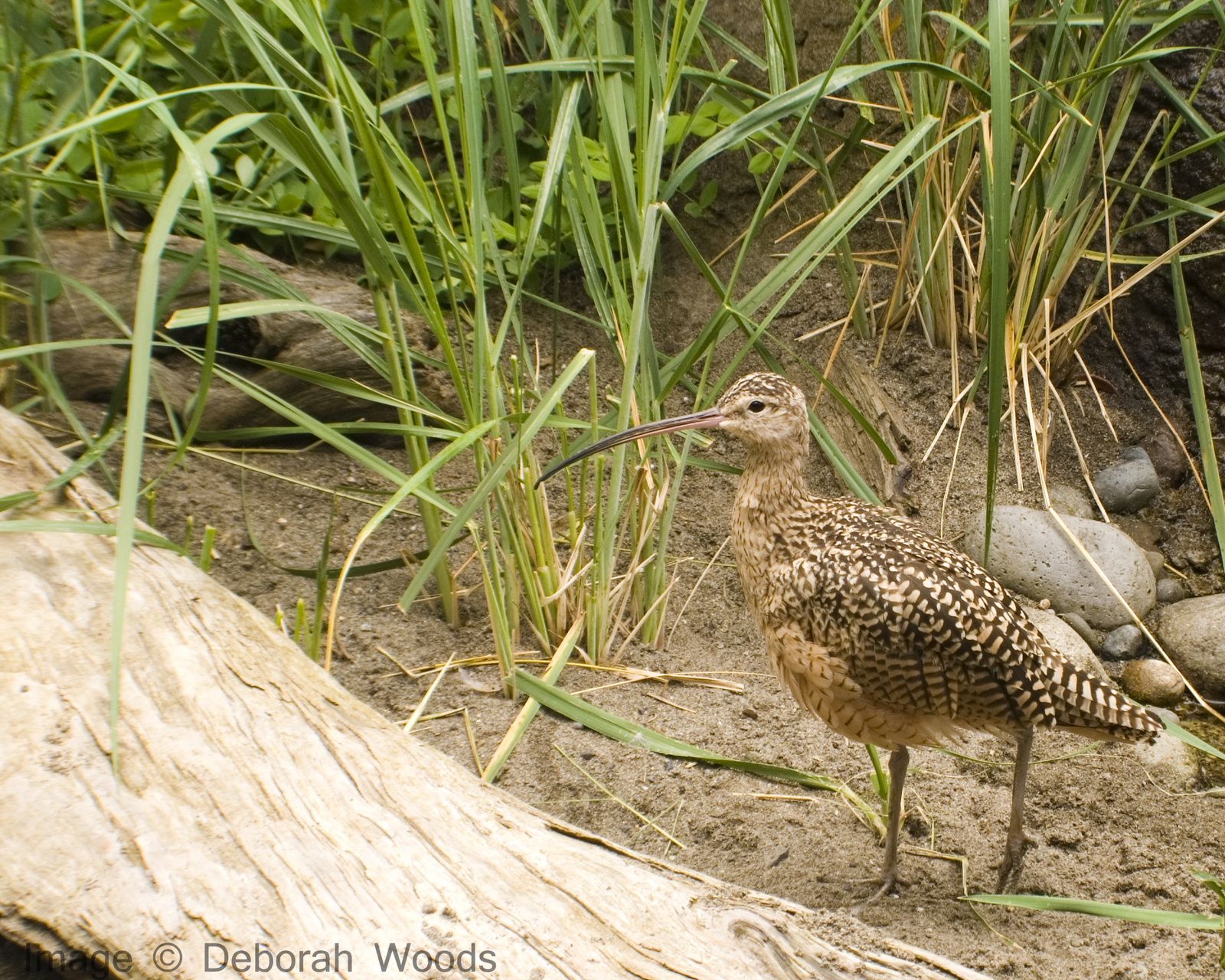
The bird lover in me is always excited over the very small portion of the aquarium containing birds. Especially exciting this time around because it gave me the chance to see a couple very high risk birds, including this little guy, a Long-billed Curlew. This little guy's species is very high risk, so getting to see one up close is pretty darn neat.


I happen to rather enjoy the penguins, auks, and puffins as well. We arrived right around feeding time, so we got to see their antics in full swing.


Have I mentioned that I birds?

The visit concluded with the viewing of the marine mammals. 


After concluding our trip to the aquarium we explored pike place. We were excited to find ourselves a little shop called the live bug safari. You can find their web page here. For a small fee you can view the collection of live insects and arachnids housed in the back. This guy actually has a pretty impressive little collection, and they're a pleasure to view. I was ecstatic to find that he was also selling little praying mantis nymphs. I was super into bugs before I developed a passion for birds, and even entertained the idea of minoring in entomology at some point. 

Needless to say I was really attracted to the idea of them. He noticed me taking a particular interest in them, and insisted on letting my hold one. I pretty much knew at that point that he was destined to be my mantid, and that he would be coming home with me. I ended up naming him Clark. (He's old enough now that I've been able to count the sections on his abdomen, and I'm fairly certain he's male, so my assumption wasn't too misguided.) 

This picture was taken just days after he came home. He was tiny here, just under an inch long. Now he's close to two!

Clark went through his first molt under my care recently, and he's doubled in size since I brought him home as a tiny little nymph. I admittedly spoil him a little bit. I catch him most of his food myself, and have worked out that he prefers flying insects, and most specifically great big juicy flies. I've kind of fallen into the role of the overprotective, doting parent. Clark is spoiled rotten for a bug. His growth has definitely reflected this though, and I expect him to get huge before he reaches his life expectancy. He should live until about some time in December. I'll definitely be adopting another mantid after he dies.


Since I got him he's darkened considerably in color. I was told that he's a Chinese Praying Mantis, and if so, he's going to look pretty awesome by his final molt, and he's going to be enormous too. Possibly up to three or four inches long. Google image them if you're curious. Mantids have great depth perception, and even before they grow wings, they're great jumpers. Clark makes very good use of his skills. He jumped onto my face tonight.


 As you can see he's gotten pretty darn big already. Below is a picture of the size he was initially, next to one of my (very small) fingers. I have tiny hands. I haven't met anyone my age with smaller hands, so you're safe to assume that he was teeny.


More pictures of Clark, just after his third molt, and sitting at about two inches long:


....

I was fortunate enough to get to take a trip to the zoo shortly thereafter, though with a different friend this time around. I love the zoo. I absolutely love it. I was kind of bummed when my camera started giving me trouble right off the bat though. I was having issues with exposure that I definitely should not have, so it wasn't a great day as far as pictures went. It took me a while to sort out the issue, and even then I was still having difficulty with quality. Luckily, I have a few pictures from a previous trip to the same zoo that I can supplement in. As a result I won't be talking about the specific goings on of the trip itself so much as my individual impressions of the animals. 

The penguins are arguably one of my favorite animals to photograph at Woodland Park because they get super curious and waddle right up to the glass. They seem to love interacting with people, which is especially great for me and my camera.


That last penguin was unusually interested in my stuffed Toco Toucan.

....

I very rarely have the chance to photograph big cats. Generally during zoo hours they spend all their time sleeping, pacing or tucked away out of sight. I can hardly blame them. There are a lot of people waiting, camera ready, for the perfect photo. I would have had an amazing opportunity to photograph the leopard this time around, if only my camera had been in decent working order. I haven't had any problems since. I have no idea what happened that day. In any case, think of how amazing this shot could have been. Both cats were lounging about right up front, enjoying the attention from the amazed onlookers. It was a pretty awesome sight. They had positioned themselves right up against the glass, and seemed to be making a spectacle of themselves. Occurrences like this lead me to believe that some zoo animals really do enjoy a small amount of exhibitionism.

To compensate for the missed Leopard opportunity, I have some pretty decent shots of the ocelot from a prior zoo outing. This very male Ocelot was pacing his enclosure, and came right up to the glass on several occasions. I found a nice spot to watch him, and he must have been interested in me and my camera because he came right on up. It was almost as if he knew, and he was striking a pose. 


....

There are tons of neat Reptiles and Amphibians at the Zoo as well. I'm especially fond of the Poison Dart frogs, and I took several pictures of them through foggy glass during both trips. There's just something about those little froggy faces that I love. There was a point in time where I remember I had an aquatic frog for a pet. I miss keeping frogs. It's something I'd like to try again at some point  


I'm rather fond of most reptiles as well, though I'm not quite avid enough to start in to Herpetology. I'll stick with one species for now I think. There were several snakes at the zoo that caught my eye. There is on green Boa in particular who is always curled up the same way, hanging over a branch.  
....

And then, of course, there are the obligatory birds photos. What is a bird blog without bird photos, honestly? I kind of feel like the first thing I did, involving birds during my first trip, was piss off the Keel-billed Toucans.    Now, from what I've heard, Toucans can be a bit ornery in the first place. I'm still not entirely sure what I did, other then talk at them, that could have set them off. Maybe just paying them direct attention was enough, but suddenly all  of the Toucans were about, and screaming their ridiculously long beaks off. In the end I'd come to the conclusion that they were either excited, or really angry. I'm still not sure which.


I took pictures of several other bird species as well, including some very familiar domestics such as the cockatiels, and a very brave Rosella that didn't flit away the second I approached it. 

A Rosella Prrot


....

I took about a hundred photos of flamingos that didn't turn out because my camera was being wonky, so the overwhelming lack of bird pictures isn't due to neglect of my responsibilities as a bird lover. It was a lovely, sunny day, and my camera still wasn't exposing photos well, even when I switched everything to automatic. I was convinced I'd either broken it, or it had been possessed by some sort or ingenious camera demon.

One neat thing I did get to do during this last trip was feed an elephant. I had fed a Giraffe before on a trip several years ago, and I had enjoyed that. I rather like giraffes though. While I don't dislike elephants, I'm not thrilled with them either. I think they have neat feet. Seriously, look into the physiology behind how their feet work. It's impressive. Other then that, I'm fairly indifferent. Feeding them was a lot of fun though, even if the process is brief.


After a fufilling trip to the zoo, and one stuffed Toco Toucan later (Ironic since the zoo didn't have any Toco Toucans), We headed home to conclude our adventuring.